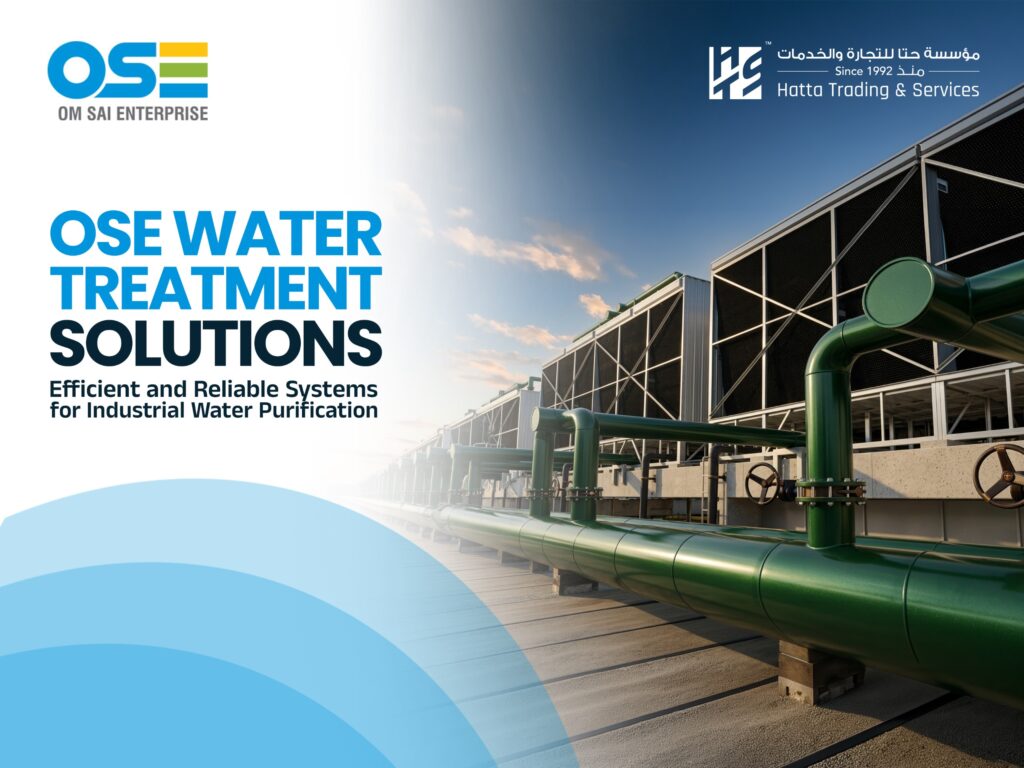
Industrial operations today depend heavily on access to high-quality process water. From power generation to manufacturing and infrastructure projects, water purity directly impacts efficiency, performance, and compliance.
Advanced water treatment systems are designed to meet these demands by delivering reliable, efficient, and scalable solutions across a wide range of industries.
Why Water Treatment Matters in Industry
Water used in industrial processes often contains dissolved salts, minerals, bacteria, and other impurities. Without proper treatment, these contaminants can:
- Damage equipment
- Reduce operational efficiency
- Increase maintenance costs
- Affect product quality
Modern treatment technologies help industries maintain consistent water quality while improving sustainability and reducing long-term costs.
Key Water Treatment Technologies
1. Demineralization (DM) Plants: Demineralized or deionized water is produced by removing dissolved mineral ions. This is achieved through ion exchange, degasification, and polishing processes.
The result is high-purity water comparable to distilled water, making it ideal for:
- Steam generation
- Power plants
- Cooling systems
- Industrial processing
2. Reverse Osmosis (RO) Systems: Reverse osmosis uses a semi-permeable membrane to remove dissolved salts, impurities, and contaminants.
By applying pressure, clean water is separated from concentrated solutions. This ensures high-quality output and makes RO systems widely used in:
- Water purification
- Bottling industries
- Industrial applications
3. Water Softener Systems: Water softeners remove hardness caused by calcium and magnesium using ion exchange resin.
These systems include brine tanks and control valves for efficient regeneration, ensuring continuous and reliable operation. They are known for durability and long service life.
4. Ultra Filtration (UF) Plants: Ultra filtration systems use membrane filtration to remove:
- Suspended solids
- Bacteria
- High molecular weight substances
They are especially effective in handling variations in water quality while remaining cost-efficient.
5. Nano Filtration (NF) Plants: Nano filtration operates between ultra filtration and reverse osmosis technologies.
It offers selective filtration with lower pressure requirements and is particularly useful for:
- Water softening
- Removing heavy metals
- Treating process streams
6. UV Disinfection Systems: UV systems provide chemical-free disinfection by using ultraviolet light to eliminate microorganisms.
This method does not alter the taste, odor, or chemical composition of water, making it a safe and effective solution.
Key Advantages of Modern Water Treatment Systems
- Efficient removal of dissolved solids and impurities
- Availability of chemical-free treatment options
- Flexible configurations for different industrial needs
- Reliable and continuous operation
- Cost-effective performance
- Easy maintenance and spare parts availability
Common Industrial Applications
Water treatment solutions are widely used across industries such as:
- Industrial process water treatment
- Power generation and steam systems
- Oil and gas and petrochemical sectors
- Food and beverage production
- Pharmaceutical and healthcare industries
- Water recycling and reuse systems
Supporting Sustainable Water Management
With increasing pressure on water resources, efficient treatment systems play a crucial role in sustainability.
By combining advanced filtration technologies with robust system design, industries can achieve:
- Reduced water waste
- Improved operational efficiency
- Long-term cost savings
- Compliance with environmental standards
Final Thoughts
Reliable water treatment is no longer optional for industrial operations. It is a critical investment in efficiency, sustainability, and long-term performance.
Modern solutions offer the flexibility and reliability needed to meet evolving industrial demands while ensuring high-quality water for every application.
Please find the below link for additional information
Read more
Kindly contact us for enquiries at: hatta@hatta.ae