Introduction
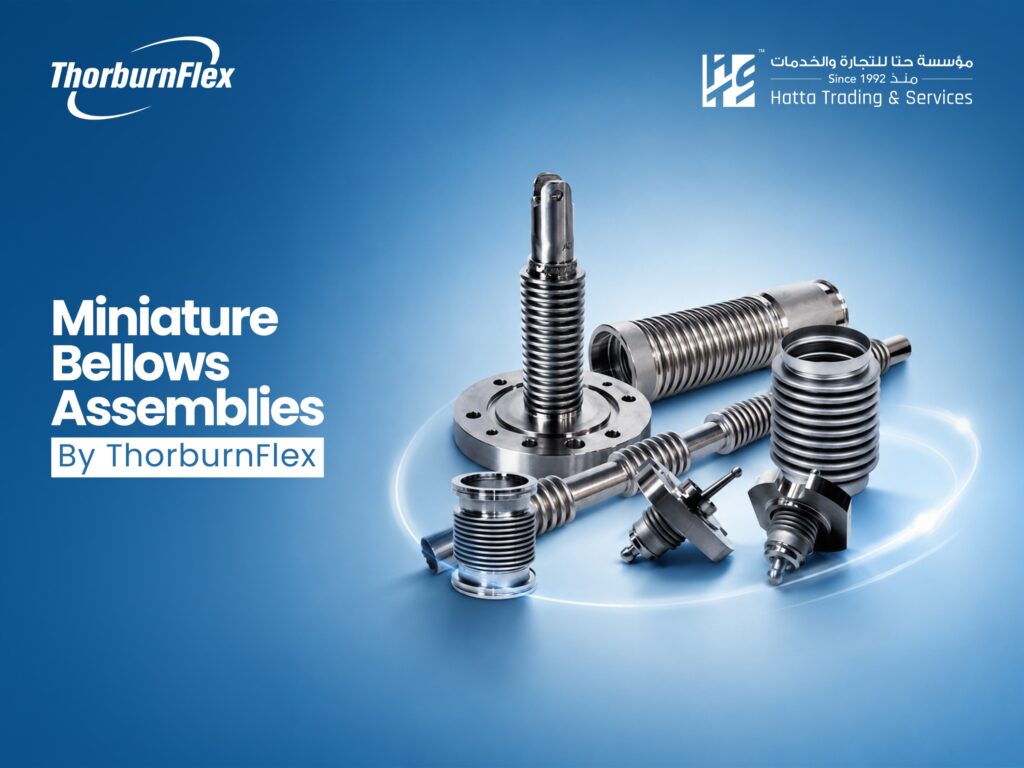
In industries where precision, reliability, and leak-tight performance are critical, miniature bellows assemblies play an essential role. These highly engineered components are designed to accommodate movement, absorb vibration, compensate for thermal expansion, and provide hermetic sealing in challenging operating environments. From nuclear power plants and petrochemical facilities to cryogenic systems and precision instruments, miniature metal bellows deliver exceptional flexibility and durability.
This article explores how miniature bellows assemblies work, their manufacturing process, key applications, and the advantages they offer across various industries.
What Are Miniature Bellows Assemblies?
Miniature bellows are thin-walled, convoluted cylindrical metal components designed to expand, compress, bend, and flex under varying pressure conditions. They function as elastic vessels that can compress when external pressure is applied or extend under vacuum conditions, returning to their original shape when the force is removed. Their dynamic flexibility and leak-tight construction make them ideal for applications requiring high precision and long service life.
These assemblies can be manufactured with diameters as small as 6 mm and are commonly used where space constraints and reliable movement compensation are essential.
Understanding Bellows Movement
Miniature bellows are designed to accommodate several types of movement within mechanical and piping systems:
- Axial Movement: Compression or extension along the bellows axis, allowing components to move closer together or further apart while maintaining a sealed connection.
- Lateral Movement: Offset movement perpendicular to the bellows axis, helping absorb misalignment and mechanical displacement.
- Angular Movement: Rotation of the bellows axis around a fixed point, useful in systems experiencing angular deflection.
- Torsional Considerations: Twisting forces should be minimized or controlled through proper engineering design, as excessive torsional stress can reduce bellows life.
By accommodating these movements, miniature bellows act similarly to springs, providing flexibility while maintaining structural integrity and sealing performance.
Hydroformed Bellows Manufacturing Process
Modern miniature bellows are commonly produced using a hydroforming process. This method involves placing seamless or welded tubing into specially designed forming plates and applying controlled hydraulic pressure. The tubing expands and conforms to the desired bellows geometry, creating precise and repeatable convolutions.
Key Benefits of Hydroforming
- Consistent dimensional accuracy
- Superior repeatability
- Enhanced durability
- Ability to create custom and complex geometries
- Excellent fatigue resistance
- Reliable performance in dynamic applications
Hydroforming ensures the production of high-quality bellows suitable for critical industrial applications requiring long-term reliability.
Technical Specifications of Miniature Bellows
Typical miniature bellows assemblies offer:
- Single-ply and multi-ply configurations
- Internal diameters ranging from 4 mm to 114 mm
- Seamless wall thickness from 0.05 mm to 0.2 mm
- Welded wall thickness from 0.1 mm to 0.2 mm
- 100% helium leak testing
- Custom engineering and design capabilities
- High-pressure and vacuum compatibility
These specifications make miniature bellows suitable for highly demanding environments where leakage or component failure is unacceptable.
Quality Assurance and Industry Standards
For critical applications, miniature bellows assemblies undergo rigorous quality verification processes, including:
- ISO 9001 quality management compliance
- ASME pressure vessel standards
- Hydrostatic testing
- Vacuum testing
- Burst testing
- Radiographic inspection
- Ultrasonic testing
- Dye penetrant testing
- Fatigue and vibration analysis
- Seismic performance evaluation
These quality measures ensure reliable operation even in harsh industrial conditions.
Applications of Miniature Bellows Assemblies
Nuclear Power Industry
Miniature bellows are widely used in nuclear facilities due to their ability to maintain leak-tight performance under extreme conditions. They serve critical functions in containment systems, reactor components, and specialized mechanical assemblies where safety and reliability are paramount.
Common Nuclear Applications:
- Elevator locking pin assemblies
- Indexing mechanism assemblies
- Reactor component sealing systems
- Flexible piping systems
Petrochemical Processing
The petrochemical industry requires components capable of handling high pressures, aggressive chemicals, and extreme temperatures. Bellows assemblies are commonly used in:
- Pressure control systems
- Fluid accumulators
- Chemical processing equipment
- High-temperature applications
- Hazardous fluid handling systems
Metal bellows accumulators provide excellent flexibility, long stroke capability, and reliable performance under demanding operating conditions.
Sealed Valve Systems
Leakage prevention is a major concern in industrial valve systems. Miniature bellows assemblies create a welded barrier between the valve stem and body, effectively eliminating emissions and fluid leakage.
Advantages in Valve Applications:
- Enhanced environmental safety
- Reduced maintenance requirements
- Improved system reliability
- Compliance with stringent industrial regulations
These systems are commonly used in nuclear plants, petrochemical facilities, vacuum systems, and hazardous gas handling applications.
Cryogenic Applications
Cryogenic systems involve extremely low temperatures that can cause material contraction and mechanical stress. Miniature bellows help absorb these stresses while maintaining system integrity.
Common Cryogenic Uses:
- Liquid nitrogen systems
- LNG transfer lines
- Oxygen handling systems
- Cryogenic valves
- Vacuum-insulated piping
- Mass flow measurement devices
Their flexibility and durability make them essential components in cryogenic engineering.
Precision Instruments and Sensors
Miniature bellows are frequently integrated into precision measurement devices where sensitivity and accuracy are critical.
Typical Instrumentation Applications:
- Pressure sensors
- Differential pressure transmitters
- Pneumatic instruments
- Electrical measurement devices
- Vacuum switches
- Leak detection systems
- Actuators and control systems
In pressure sensing applications, bellows convert pressure variations into mechanical movement, which can then be translated into electrical signals for monitoring and control purposes.
Benefits of Miniature Bellows Assemblies
Choosing miniature metal bellows offers several advantages:
Exceptional Flexibility:
Accommodates complex movement while maintaining sealing performance.
Hermetic Leak-Tight Design:
Ensures zero leakage in critical applications through welded construction.
High Reliability:
Engineered for long operational life and consistent performance.
Corrosion Resistance:
Suitable for aggressive chemical and environmental conditions.
Compact Design:
Ideal for installations where space is limited.
Superior Fatigue Life:
Capable of handling repeated cycling and dynamic movement.
Conclusion
Miniature bellows assemblies have become indispensable components across industries that demand precision, durability, and leak-free performance. Whether used in nuclear power generation, petrochemical processing, cryogenic systems, valve sealing, or advanced instrumentation, these engineered solutions provide unmatched flexibility and reliability.
With advanced hydroforming technology, rigorous quality testing, and extensive customization capabilities, miniature bellows assemblies continue to support critical industrial systems where performance cannot be compromised.
Please find the below link for additional information
Read more
Kindly contact us for enquiries at: hatta@hatta.ae